

 العربية
 فارسی
فارسی Türkçe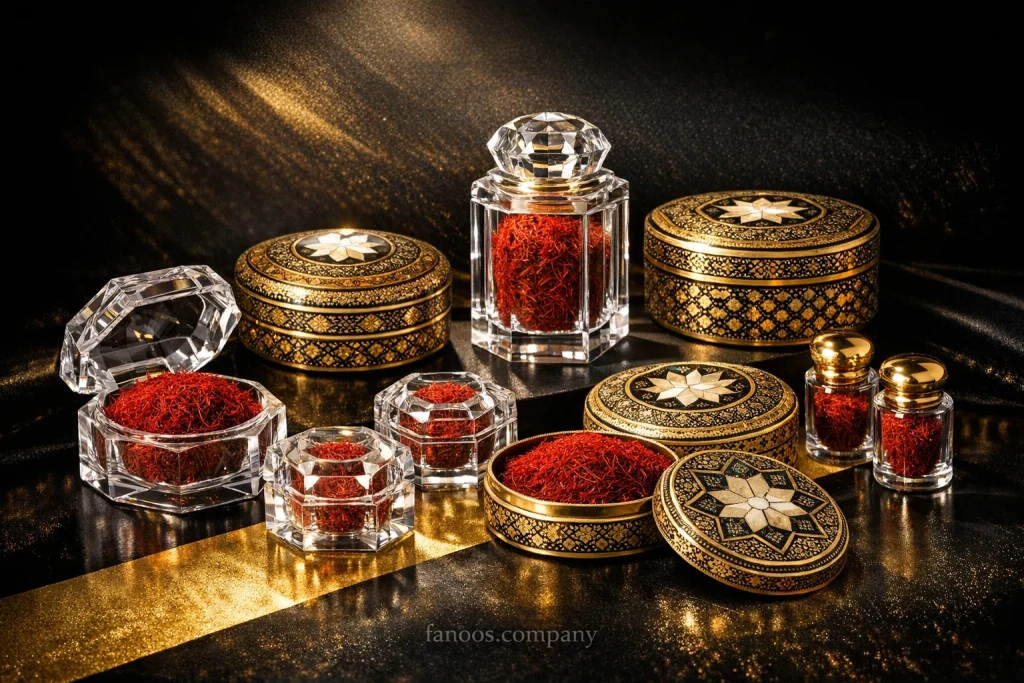
The Importance of Proper Saffron Packaging
Saffron threads are fragile and can easily lose their aroma, color, and medicinal properties if not stored properly. Packaging protects the product from environmental factors and ensures that consumers receive authentic, high‑quality saffron.
Proper packaging helps to:
- Protect saffron from light, air, and humidity
- Preserve aroma, flavor, and color
- Prevent contamination and adulteration
- Increase shelf life
- Improve brand identity and product presentation
Key Standards for Saffron Packaging
International markets require saffron packaging to meet certain quality and safety standards. These standards ensure that the product remains safe, authentic, and traceable.
Food Safety Standards
- ISO 3632: International standard for saffron quality classification.
- HACCP: Hazard Analysis and Critical Control Points system for food safety.
- FDA regulations: Required for exporting saffron to the United States.
- EU food safety regulations: Necessary for exporting to European countries.
Packaging Requirements
- Use of food‑grade materials
- Airtight and moisture‑resistant containers
- Protection from direct light
- Clear labeling with product information
- Tamper‑evident sealing
Types of Saffron Packaging
Saffron can be packaged in several forms depending on the target market, price segment, and distribution method.
Glass Containers
Glass jars are among the most common and premium packaging options for saffron. They are airtight and preserve aroma and quality effectively.
- Excellent protection against moisture
- Premium appearance
- Suitable for retail and gift packaging
Metal Containers
Metal tins are durable and protect saffron from light and physical damage. They are often used for export packaging.
- Strong and protective
- Light‑blocking properties
- Suitable for transportation
Plastic Containers
Food‑grade plastic containers are lightweight and cost‑effective. They are commonly used for small retail packages.
- Affordable packaging option
- Lightweight and easy to transport
- Widely used in domestic markets
Crystal and Luxury Packaging
Luxury saffron packaging uses decorative glass, crystal containers, or artistic boxes designed for gifts and premium markets.
- High aesthetic value
- Suitable for luxury and gift markets
- Enhances brand prestige
Labeling Requirements
Proper labeling is essential for both consumer information and regulatory compliance.
A standard saffron label should include:
- Product name (Saffron)
- Net weight
- Country of origin
- Production and expiration dates
- Batch or lot number
- Storage instructions
- Producer or exporter information
Export Considerations for Saffron Packaging
When exporting saffron, packaging must meet international transportation and regulatory requirements to ensure product integrity and compliance.
Protection During Transportation
- Use shock‑resistant packaging
- Prevent exposure to humidity and heat
- Use secondary protective boxes
Compliance with Import Regulations
- Follow labeling regulations of destination countries
- Provide necessary certificates and documentation
- Ensure packaging materials meet food safety standards
Branding and Market Appeal
Attractive and professional packaging can significantly influence consumer purchasing decisions in international markets. Many exporters invest in elegant designs, multilingual labels, and premium materials to increase market competitiveness.
Storage Recommendations
Even with proper packaging, saffron should be stored correctly to maintain its quality.
- Store in a cool, dry place
- Avoid direct sunlight
- Keep containers tightly sealed
- Store away from strong odors
Conclusion
Saffron packaging plays a critical role in preserving the quality, authenticity, and market value of this precious spice. By following international standards, choosing appropriate packaging materials, and ensuring proper labeling and storage, producers and exporters can successfully deliver high‑quality saffron to global markets. Well‑designed packaging not only protects the product but also strengthens brand identity and increases consumer trust.