

 العربية
 فارسی
فارسی Türkçe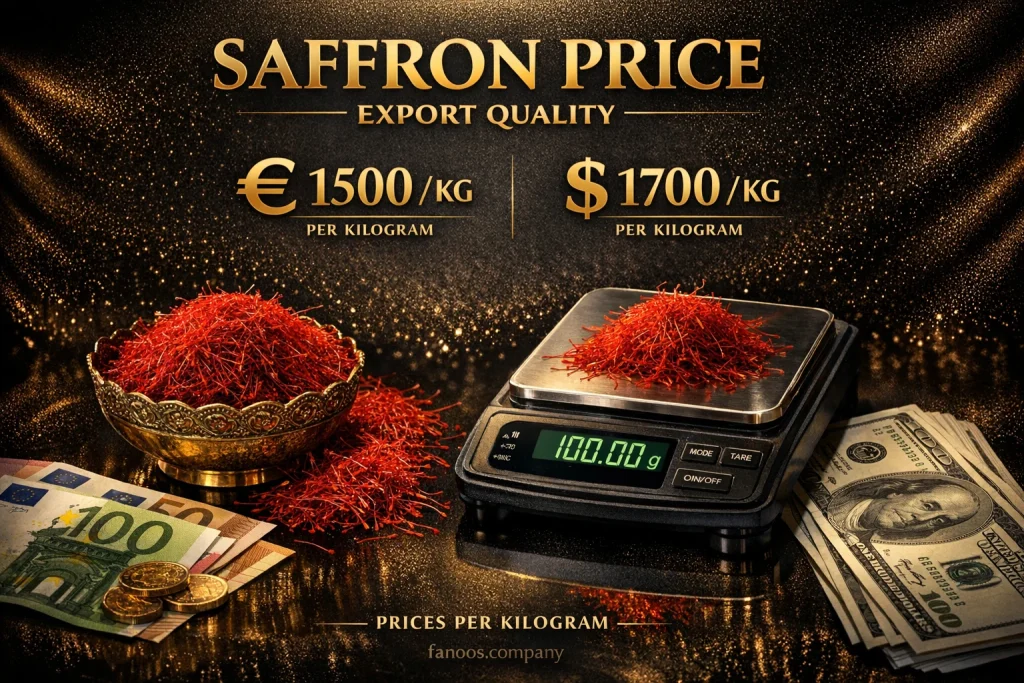
Why Saffron Is Expensive
Producing saffron requires careful manual work. Each saffron flower contains only three red stigmas, which must be harvested by hand. It takes around 150,000 to 200,000 flowers to produce just one kilogram of dried saffron. This intensive harvesting process is one of the primary reasons for its high market value.
- Manual harvesting of delicate stigmas
- Short harvesting season
- Large number of flowers needed for small yield
- Careful drying and processing methods
Main Factors Affecting Saffron Price
1. Quality Grade
Saffron quality significantly influences its price. High‑grade saffron has strong color, aroma, and flavor due to higher levels of compounds such as crocin, safranal, and picrocrocin. Premium grades such as Super Negin or Negin are usually more expensive than lower grades like Pushal or Bunch.
2. Country of Origin
The region where saffron is grown can impact its price. Countries like Iran, Spain, Afghanistan, and India produce saffron with different qualities and market reputations. Iranian saffron, for example, is widely known for its high quality and large production volume.
3. Harvest Conditions
Weather conditions, soil quality, and farming techniques affect the yield and quality of saffron each year. Poor harvest seasons may lead to limited supply and higher prices.
4. Processing and Drying Methods
Traditional and carefully controlled drying methods help preserve saffron’s color and aroma. High‑quality processing increases the product’s value and price.
5. Packaging and Branding
Packaging can also influence the final price. Premium packaging, glass containers, or luxury gift boxes often increase the retail price even though the saffron quality may remain the same.
6. Supply and Demand
Global demand for saffron in food, medicine, and cosmetics continues to grow. When demand increases or supply decreases, prices tend to rise in international markets.
Average Market Price of Saffron
Saffron prices vary depending on quality, origin, and packaging. In international markets, prices are typically measured per gram or per kilogram.
- Premium saffron (Super Negin): highest price range
- Standard saffron (Negin or Sargol): medium to high price
- Lower grades (Pushal or Bunch): lower price range
Wholesale prices are usually significantly lower than retail prices because packaging, branding, and distribution costs are not included.
How to Identify the Real Price of Saffron
Understanding saffron quality can help buyers determine whether the price is reasonable. Extremely cheap saffron may indicate poor quality or adulteration.
1. Check the Color
High‑quality saffron has deep red threads with minimal yellow or orange parts. Excessive yellow portions usually indicate lower quality.
2. Evaluate Aroma
Real saffron has a unique aroma combining sweet, floral, and slightly earthy notes. Weak or artificial smells may indicate poor quality.
3. Perform a Water Test
When placed in warm water, authentic saffron slowly releases golden color over several minutes. Fake saffron often releases color immediately.
4. Examine Thread Shape
Real saffron threads are trumpet‑shaped at one end. Uniform or powdery saffron may be mixed with other substances.
5. Compare Market Prices
Checking prices from reputable sellers and comparing them with market averages can help determine if the price is realistic.
Tips for Buying Saffron
- Buy saffron from trusted brands or certified suppliers
- Choose whole threads instead of powder when possible
- Check packaging for production date and origin
- Avoid prices that seem unusually low
- Store saffron in airtight containers away from light and moisture
Conclusion
Saffron’s price is influenced by many factors, including quality grade, origin, harvesting conditions, processing methods, and market demand. Because saffron is a premium product, understanding these factors can help consumers recognize genuine value and make informed purchasing decisions. By learning how to evaluate saffron quality and compare prices, buyers can ensure they receive authentic saffron at a fair price.